Why Customs Seized Your Kretek: The Red Line of 2026
The fluorescent lights of the customs hall at Schiphol are designed to strip away confidence. I have stood there, watching the blue-uniformed officers pull a carton of Gudang Garam from a student's suitcase like they were handling contraband plutonium. There is no scent of cloves in that room, only the smell of cold coffee and bureaucracy. When they take your cigarettes, they don't just take your money; they take your link to home.
In 2026, the border is no longer a suggestion. It is a filter. If your shipment of Djarum Black vanished between Jakarta and London, it likely didn't get lost at sea. It was likely intercepted by a system that has become increasingly efficient at spotting the very things that make us feel human in a cold climate. Understanding why they seize it is the only way to navigate the risk.
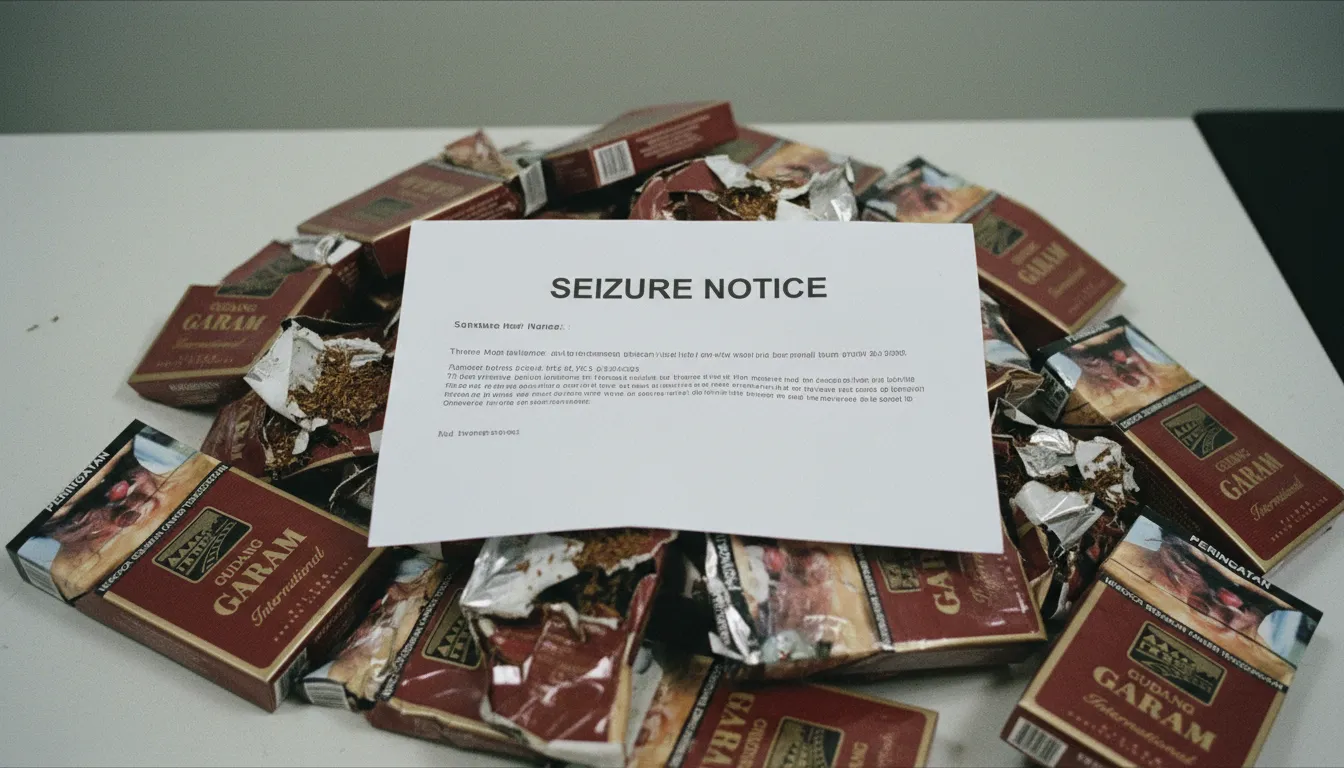
The Characterising Flavor Trap
The most common reason for seizure in the European Union is the Tobacco Products Directive (TPD) ban on characterising flavors. Since clove is the defining soul of a kretek, any product wrapped in traditional white cigarette paper is an immediate target. The authorities classify these not as "tobacco" but as prohibited flavored cigarettes.
Unless your product is technically classified as a "cigarillo"€”meaning it has a brown tobacco leaf wrapper and meets specific weight requirements€”it is legally invisible to the retail market. Customs officers are trained to look for the "white stick" profile. If they see it, they don't care if it's for personal use; they see a violation of the EU flavor ban. This is why many are moving toward the technical loophole of clove cigars.
The Excise and Duty Wall
Even if the flavor isn't the issue, the money is. The UK and EU are currently facing a massive surge in illicit tobacco trade, with consumption hitting its highest level since 2015. Consequently, customs at hubs like Rotterdam and Felixstowe are on high alert for "ant trade"€”the aggregation of small personal shipments that bypass duty.
When a personal courier or a "Jastip" traveler carries more than the allowed 200 sticks, the shipment is flagged as commercial. Without a Digital Tax Stamp or proof of paid excise duty, the goods are seized and often destroyed. The OLAF (European Anti-Fraud Office) has become significantly more aggressive in 2025, tracking both the physical goods and the payment flows behind them.
Common Reasons for Confiscation (2025-2026)
- Flavor Ban Violation: Any cigarette with a "characterising flavor" like clove is banned under TPD.
- Incorrect HS Classification: Using the wrong code (e.g., calling cigarettes "herbal tea") is a major red flag for scanning systems.
- Commercial Quantity: Exceeding the 200-stick personal limit without a commercial license.
- Missing Tax Stamps: Products without a traceable Digital Tax Stamp are considered illicit.
- Shipping Delays & Inspection: Increased shipping delays lead to longer storage in hubs where the risk of inspection increases.
Where the System Fails
The friction lies in the inconsistency. A package of Gudang Garam might slip through Frankfurt but get incinerated in London. This "customs lottery" is what drives people to the traps of informal couriers. When you use an amateur Jastip seller, you have zero protection. If customs takes the bag, the seller disappears, and you are left holding a seizure notice instead of a smoke.
The logic also breaks with payment. Because tobacco is "high-risk," many sellers use shadowy payment methods. If your bank sees a transfer to a known "grey-market" entity, they might freeze your account before the goods even reach the border. This is why many are looking into the risks and rewards of crypto tobacco payments to keep their transactions off the main radar.
The Verdict
In 2026, customs is no longer looking for needles in haystacks; they have magnets. The combination of flavor bans, high sin taxes (reaching 100% in some regions), and a crackdown on illicit trade makes importing kretek a high-stakes gamble. Unless you are working with a seller who understands technical reclassification (the "Cigarillo Pivot"), your cloves are likely to end up in a customs incinerator.
Seizure Risk: High (8/10 for non-compliant packaging)
I still see the notices on the Reddit threads€”people complaining that their "gift" from Indonesia never arrived. It wasn't a gift to the customs officer; it was just more paperwork for them to burn. The border is a cold place for a clove smoker. If you want to keep your stash, you have to stop thinking like a consumer and start thinking like a logistics manager. Or just wait until you can go back to Temanggung, where the only thing you have to worry about is the rain.