The Breath of Kudus: Haji Jamhari and the Accidental Invention
Kudus is a town built on smoke and saints. When the air is still, you can smell the ghost of cloves from the massive factories that dominate the skyline. But before the industrial giants, there was just a man with a heavy chest. Haji Jamhari did not set out to build an empire. He just wanted to breathe without pain. In the late 19th century, around 1880, he was suffering from chest pains€”likely asthma or bronchitis€”that the humid air of Central Java only made worse.
He lived in an era when the Dutch clove trade was a brutal machine, yet for the locals, the spice remained a kitchen remedy. Jamhari took a handful of cloves, crushed them, and mixed them with tobacco. He rolled them in a dried corn husk (klobot) and lit up. The sizzle and pop of the burning clove oils€”the "keretek-keretek" sound€”became the heartbeat of a new industry.
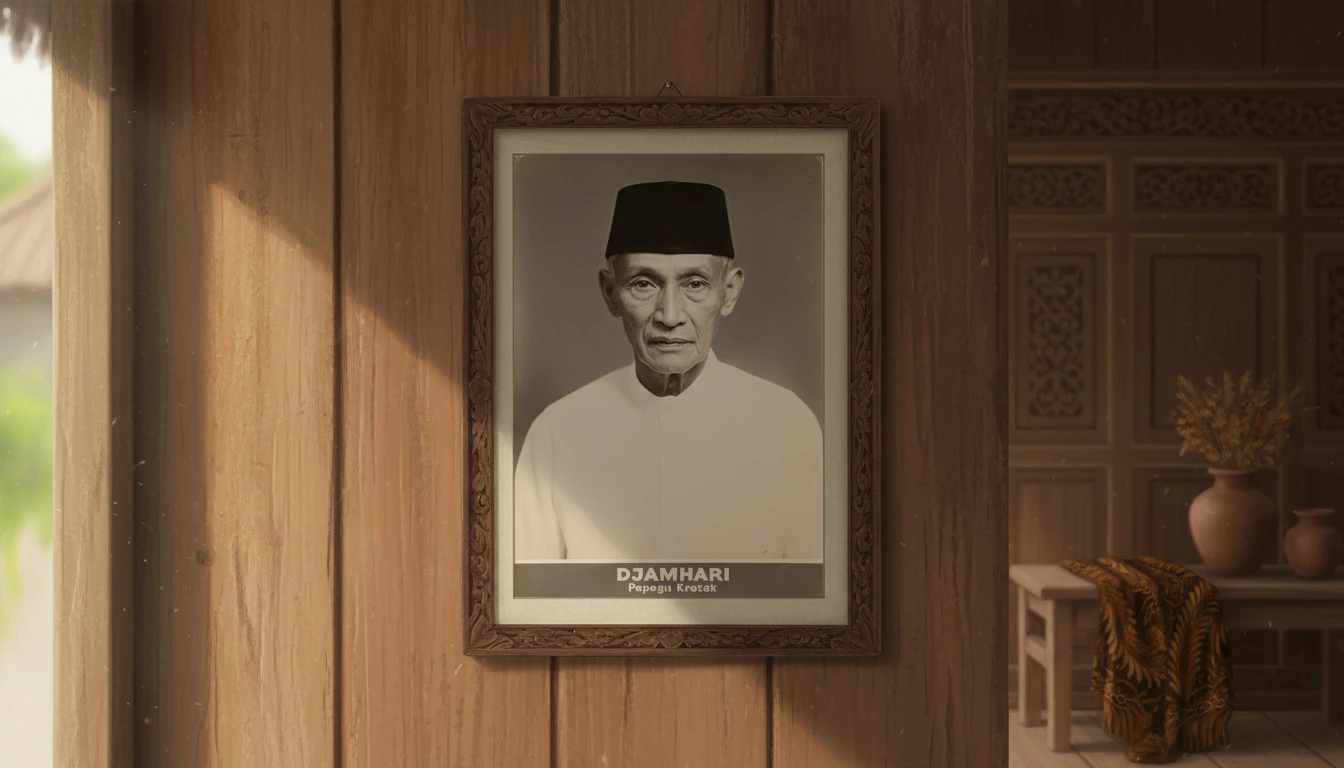
The Pharmacy in the Smoke
To Jamhari, this wasn't a luxury; it was a delivery system for eugenol, the anesthetic oil in cloves. It worked. His chest pain receded. He began selling his "medicine" in local pharmacies as a cure for respiratory ailments. This transition from herbal remedy to cultural ritual happened almost overnight. The people of Kudus didn't just want the cure; they wanted the taste.
By the time Jamhari died in 1890, his invention had already outgrown the pharmacy shelf. He never saw the rise of the massive machine-made brands or the unfiltered legends that would follow. He left behind a town that had found its identity in the scent of burning spice.
Technical Evolution of a Remedy
The original "Jamhari blend" was crude. It relied on high clove content and sun-dried tobacco from the local hills. There were no filters, no branding, just the raw power of the ingredients. This was "hand-rolled" in its truest, most primitive form, a far cry from the modern Sampoerna A Mild we see today.
The botanical soul of kretek remains the same, however. The interaction between the nicotine and the eugenol creates a unique chemical profile that the Dutch colonizers never quite managed to regulate or replicate. They had the tobacco plantations, but they lacked the secret of the blend.
The Original Kretek Profile
- Wrapper: Klobot (dried corn husk), which added a distinct sweet, toasted aroma.
- Clove Content: Significantly higher than modern blends, intended for high eugenol delivery.
- Tobacco: Dark, air-cured Javanese varieties with high nicotine content.
- The "Sound": The eponymous "kretek" crackle caused by the expansion of clove oils under heat.
The Friction of Success
Where logic breaks is in how we view Jamhari's legacy today. Modern regulators in the EU and the US treat the clove cigarette as a "gateway" for youth, a flavored gimmick. They ignore that it was born as a traditional medicine for a struggling laborer. The friction between its medicinal roots and its modern status as a "prohibited flavor" is a testament to how far Western regulation has drifted from cultural reality.
Even as the Red Sea shipping delays choke the global supply, the demand for what Jamhari started remains unshakable. We aren't just chasing a nicotine hit; we are chasing a century-old relief that started with a man who just wanted to take a deep breath in the heat of Kudus.
The Verdict
Haji Jamhari is the patron saint of the clove. He didn't invent a tobacco product; he invented a sensory experience that redefined a nation's social fabric. While modern brands like Djarum and Gudang Garam have industrialized his spark, the soul of every kretek is still that first klobot rolled in a quiet house in Kudus.
Historical Impact: 100% Foundational
I often wonder what Jamhari would think of a Djarum Black pack sitting in a sterile London shop. He would probably find it too clean, too muted. He knew that the true power of the clove isn't in the branding, but in the heat and the crackle. As long as there is one person in Java rolling a clove and tobacco leaf together, Jamhari's breath lives on. The spice survives every law they throw at it.