The King of Kudus: Nitisemito and the Bal Tiga Monopoly
The air in Kudus still carries the weight of empires, though the ones built by Nitisemito have long since crumbled into the humid Javanese soil. If Haji Jamhari was the spark, Nitisemito was the wildfire. He didn't just sell cigarettes; he sold an identity. By the early 1900s, he had transformed a medicinal home industry into a marketing behemoth known as Bal Tiga (Three Balls). At its peak, his factory employed over 10,000 workers, making him the undisputed King of Kudus.
Nitisemito was a man who understood the smoking culture shock of his time. He saw the encroaching Western white cigarettes and decided to fight back with sheer industrial scale. He was the first to realize that for kretek to survive, it couldn't just stay in the pharmacy. It had to be everywhere. He was the tycoon that the Dutch colonial authorities both feared and admired, a local capitalist who beat the Europeans at their own game.
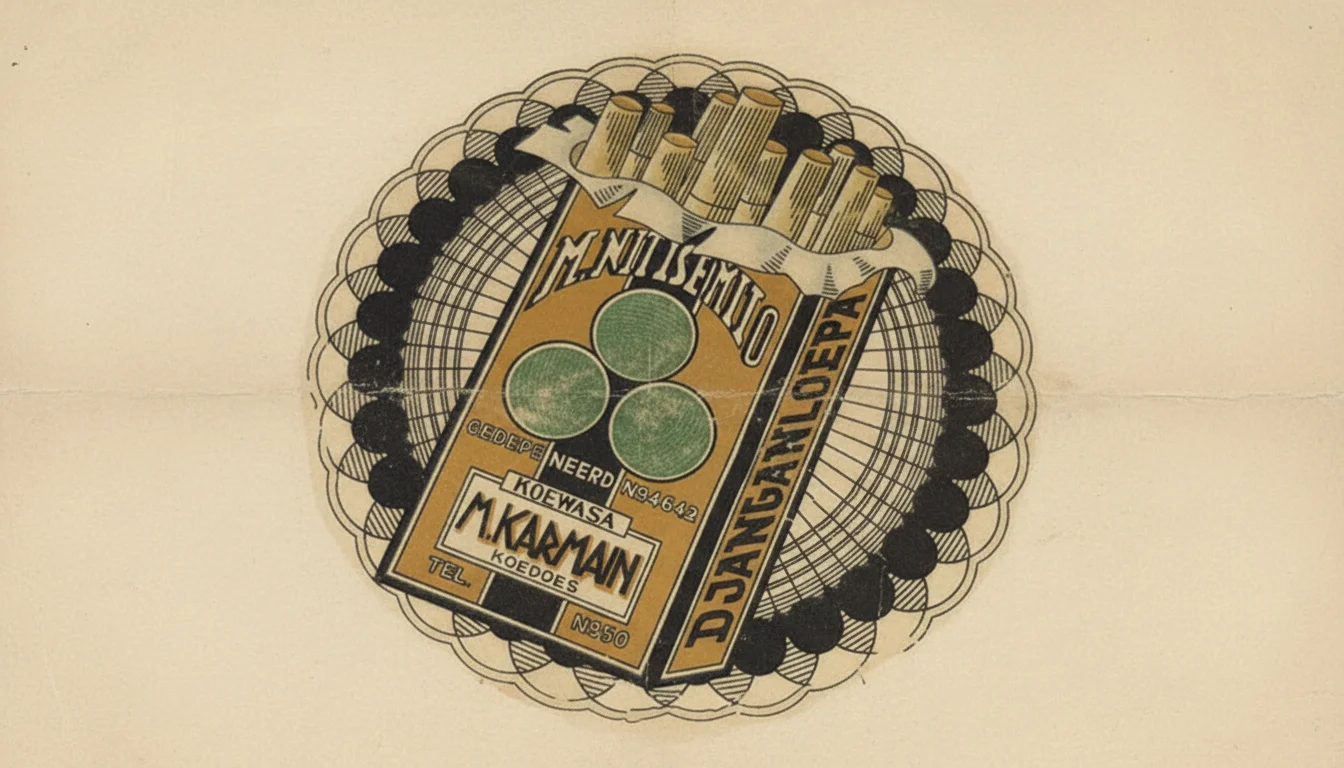
The Marketing Genius of the East
Nitisemito's rise wasn't just about the blend; it was about the spectacle. He pioneered the use of promotional items€”clocks, plates, even bicycles€”branded with the Bal Tiga logo. He understood that in the history of kretek, the ritual of smoking was tied to social status. If you smoked Bal Tiga, you were part of the modern, rising indigenous class. He even hired airplanes to drop leaflets over Javanese cities, a feat of marketing that was unheard of in the 1920s.
His monopoly was built on a sophisticated distribution network that predated modern supply chain theory. He bypassed the traditional market stalls and built his own depots. This allowed him to maintain the clove trade empires' focus on exclusivity while reaching the masses. He wasn't just a seller; he was an architect of desire.
The Fall of the Three Balls
Every empire has its friction point. For Nitisemito, it was a combination of internal family squabbles and the shifting tides of the colonial tobacco regulations. The Dutch, wary of his influence and wealth, began tightening the screws with new excise taxes and technical requirements that favored larger, Western-style conglomerates. By the time the Japanese occupation hit in 1942, the Bal Tiga empire was already fractured.
The tragedy of Bal Tiga is that it vanished almost as quickly as it rose. Unlike modern giants like Gudang Garam or Djarum, Nitisemito's brand didn't survive the transition to the post-independence era. He died in 1953, a man who had seen his palaces turned into ruins. Yet, his influence remains. Every time you see a kretek brand sponsoring a massive concert or a sporting event today, you are seeing the ghost of Nitisemito's marketing playbook.
The Bal Tiga Monopoly Data
- Peak Employment: Approximately 10,000 - 15,000 workers in the Kudus region.
- Daily Production: Estimated at over 8 million sticks during the 1930s.
- Promotional Innovation: First to use a "points system" where wrappers could be exchanged for luxury goods.
- Distribution: Established a "Keagenan" (Agency) system that became the blueprint for all future Indonesian tobacco companies.
Where Logic Fails
The friction in Nitisemito's story lies in the lack of institutional memory. In the West, a brand like Bal Tiga would have been preserved in a museum of commerce. In Indonesia, we moved on. We left his grand houses to rot while we built newer, shinier factories. The unfiltered legends of today owe everything to his early industrialization, yet his name is often a footnote in the shadow of the current big players.
Even today, as we deal with shipping delays and global crises, we see the echoes of his struggle. Nitisemito fought to keep the indigenous industry relevant in a world that wanted to standardize everything. He showed that a Javanese entrepreneur could build a monopoly that rivaled European crowns. The friction wasn't just in the market; it was in the daring to exist as a local giant in a colonial world.
The Verdict
Nitisemito was the bridge between the medicinal ritual of Haji Jamhari and the global industry we see today. He proved that the botanical soul of kretek could be scaled without losing its cultural essence. Though the Bal Tiga brand is dead, the blueprint of the Indonesian tobacco tycoon was written in its ashes. He remains the ultimate proof that cloves and tobacco are not just a smoke; they are a power move.
Historical Impact: 10/10 (The Architect of the Industry)
I walked past the remains of a Nitisemito warehouse once. It was overgrown with vines, the bricks crumbling under the weight of the rain. But even in that decay, you could feel the ambition. He took a simple Javanese habit and turned it into a monopoly that made the Dutch tremble. Today, we worry about crypto payments and regulations, but Nitisemito faced down an empire with nothing but cloves and a dream of three balls. We are all living in his wake.