The Physics of the Crackle: Why Kretek Sounds Like Home
The first time I lit a Djarum in a quiet German park, the sound felt like a gunshot. In the damp, heavy silence of a European winter, that rhythmic snapping is alien. In Temanggung, it is just the background radiation of life. It is the sound of a porch at dusk, of rain hitting a zinc roof, and of men talking about the harvest.
We call it kretek-kretek. It is an onomatopoeia that defines an entire industry. But beneath the nostalgia lies a violent, miniature physical reaction occurring just millimeters from your lips.
Eugenol and the Vapor Flash
The secret is the clove (Syzygium aromaticum). Cloves are not just for flavor; they are biological oil reservoirs. About 15% to 20% of a dried clove's weight is essential oil, predominantly eugenol. When you pull air through the lit end of a kretek, you are raising the temperature of those tiny clove bits to several hundred degrees Celsius almost instantly.
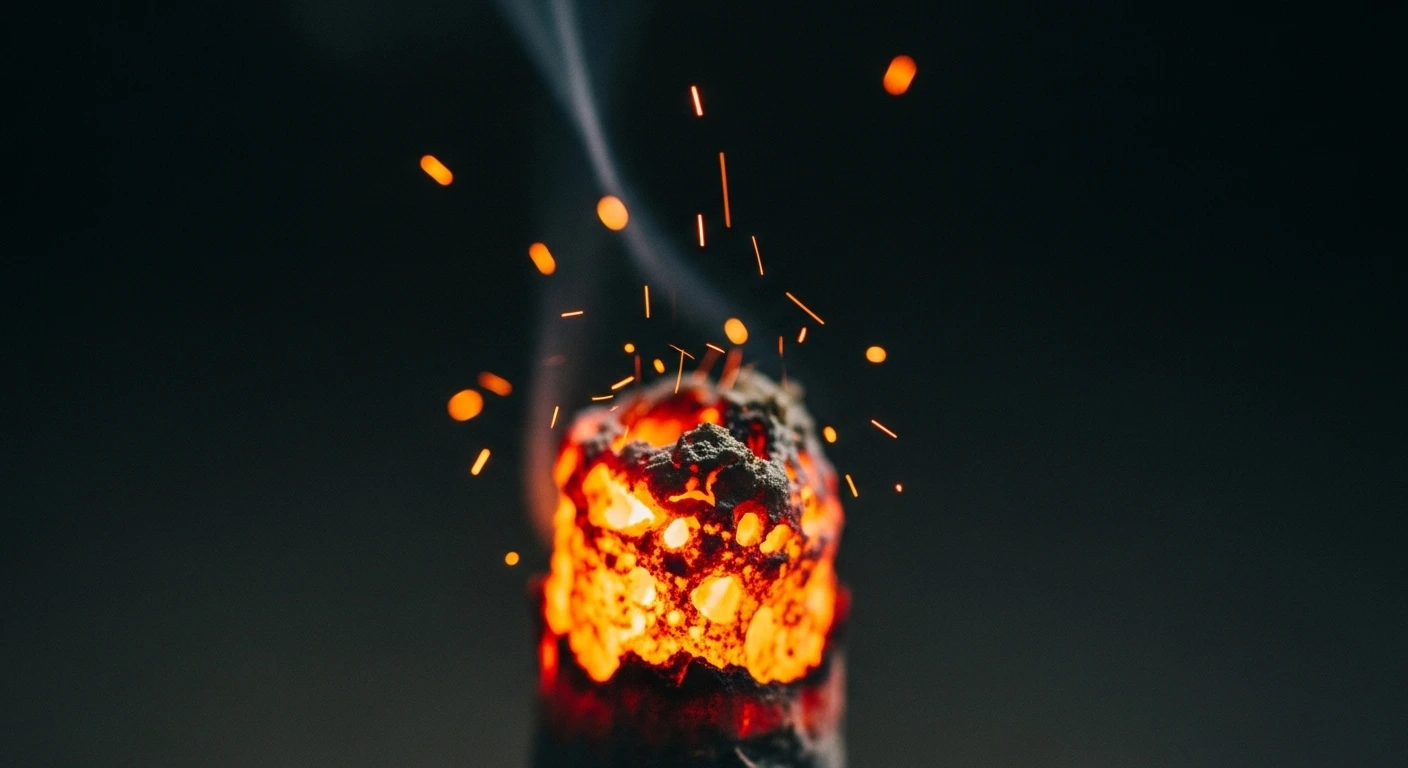
Unlike tobacco leaves, which smolder, the oil inside the clove particles reaches its boiling point and vaporizes. Because this oil is trapped within the cellular structure of the spice, the pressure builds until the cell wall fails. The "crackle" is actually a series of micro-explosions as pockets of superheated eugenol vapor burst out of the clove fragments.
The Anatomy of the Snap
- Primary Catalyst: High concentration of Eugenol oil in dried cloves.
- Sound Trigger: Rapid vaporization and cellular rupture under high heat.
- Acoustic Profile: Random, high-frequency transients ranging from 2kHz to 10kHz.
- Cultural Significance: The namesake of the Indonesian tobacco industry.
The Psychology of the Pop
In the West, cigarettes are engineered for "smoothness." They want them quiet, white, and predictable. But a European cigarette often tastes like burnt paper because it lacks the structural complexity of a hand-rolled kretek. For us, the sound is a signal of quality. If it doesn't crackle, the cloves are old or the humidity has ruined the stick.
The sound also serves a social function. It is a sensory marker that distinguishes a kretek smoker from someone smoking a "white" cigarette. In the history of Haji Jamhari and the birth of kretek, the sound was secondary to the medicinal intent, but it quickly became the ritualistic heart of the experience.
Friction and Modernity
As we move toward 2026, the crackle is under threat. Not by science, but by regulation. The EU's "characterizing flavors" ban has forced many producers to pivot toward technical classifications like "Cigarillos" to survive. While a Djarum Black in Europe might still snap, the tightening of the "Cigarillo Loophole" means the physical composition of these sticks is changing to meet weight and wrap requirements.
There is a fear among purists that industrialization€”the shift from hand-rolled to machine-made€”dampens the acoustic soul of the cigarette. A machine packs the cloves too tightly, too uniformly. You lose the wild, irregular rhythm of a hand-blended batch from a small factory in Kudus or Magelang.
The Verdict
The sound of a kretek is a physical testament to its ingredients. It is a chaotic, beautiful symphony of oil, heat, and pressure. Without the crackle, it is just smoke. With it, it is a reminder of a home that is thousands of miles away, yet as close as the next drag.
Sensory Rating: 100% Authentic
I finished my smoke and watched the embers fade. The park was silent again. The Germans might have their precision and their quiet, but they don't have the fire that speaks back to you. I put the stub in the bin and walked home, the smell of eugenol still clinging to my coat like a memory.